(Image:Matthias Clamer/Stone+/Getty)

I broke out of my legal marketing industry bubble this week and have been attending the Chief Marketing Officer Institute in Vegas. For fun and comfort, I dragged along Adam Stock and Jonathan Fitzgarrald.

The CMO Institute has been a small and intimate, yet high-level and well-crafted event. Sure, there have been some misses from the podium, but, for the most part, my Curious George has been satisfied.

It’s been amazing, invigorating, eduational, and fun.

It’s encouraging,validating, and a bit frightening to realize we laugh at the same jokes: “Who’s department is seen as a cost center,” hahaha.

It’s been rewarding as I sat and brainstormed a challenge I had with CMOs from different industries and sectors and realized they had fresh solutions for me, and at other times validated my assumptions.

It’s been eye-opening to speak with my counterparts in the companies that my firm represents. Hello? Bueller? Bueller??? Makes sense. Right?? Enough GC Roundtables. I want to see CMO Rountables.

Not only did I make some new friends (Steve, Heather, you know I am talking about you), I found a new blog to follow Common Sense of Business.

Along with a couple products that I think could migrate easily into legal, Domo and Marketo, I also have some great content swirling around my head just waiting to be turned into blog posts, (must.write.before.I.forget).

I still have a few more sessions today before heading out to Chicago for the LMA Board meeting, where it’s supposed to be a high of 61* today, and a high of 19* on Thursday. What the hell is THAT??

I think I will bring a better me to Chicago (still bitching about the weather). A more passionate me (you guys are warned, lol). A more engaged me.

For my personal “marketing me,” I will continue to add non-legal marketing programs like the Chief Marketing Officer Institute, to my mix.

The intimacy of the event allowed me to quickly meet new colleagues, and have some insightful, funny and memorable conversations and experiences, bring back new ideas to help me do my job better, and some new friends.

Can’t beat that. Except for the LMA Annual Conference coming up in April.

Jonathan and I have been tweeting at #CMOInstitute if you’d like to follow along today, or get an idea of what we’ve been experiencing and capturing over the past couple days.

Strategic PlanningA way too short, but link-bait worthy titled article, is making its way into the conversation of legal marketers this week about law firms and strategic planning.

In fact, I am certain that Rita McGrath‘s article in the HBR Blog Network, Creative Destruction Visits the Legal Profession, is sure to be a topic of conversation and buzz at this week’s Marketing Partner Forum (follow along on Twitter at #MPF2013), as well it should be.

We’re chatting about it in my Legal Marketers Extraordinaire group on Facebook (A private group I started. PM me via The Legal Watercooler‘s Facebook page if you want to join).

In many ways I have to agree with Ms. McGrath’s initial paragraph:

Some years ago, I had the rather thankless task of directing a program on strategy for law firms. It was thankless in part because about half the participants didn’t think law firms needed a strategy. They figured if you were smart, served your clients well and worked hard that things would be fine, as they historically often have. Just keep billing those hours! The other half might have been open to the idea that law firms needed a strategy, but completely opposed to having anything other than a consensus-built, senior partner-friendly mechanism for making strategic choices, which almost by definition is doomed to fail. Tough decisions such as which clients to serve and which not; which partners are creating value and which are not; and where to focus in terms of practice expertise and geography are nearly impossible to make by committee.

Over the years, I have been in those meetings. I have sat in on those calls. I have worked to build strategic plans, only to see them fully ignored. Or, better yet, fail because those who did not buy-in picked up their toys and went to another sandbox to play.

Here’s my (short) take on Ms. McGrath’s article from our conversation on the LME group:

Of course she had a less-than-receptive audience. And, speaking with my peers, it’s still not the most receptive audience. Definitely getting better. Still room for lots of improvement.

The good new is that the concepts and implementation of true strategy can be found in large, small, regional firms (but not all). It’s no longer the purview of a few “forward thinking” firms.

And, for the firms that do invest the time, energy, money, and emotional capital to prepare a strategic plan, how well it is carried out, and how many barriers are faced, is still open to debate.

So why is this buzz-worthy considering Ms. McGrath’s experience took place “some years ago”?

Because it is still true today in too many firms.

Yes, there are some firms — mega, large, small, regional, boutique — that really get it and are operating at a highly strategic level. But how many of those firms were driven to this change by the recession? How many will willingly slide back into complacency now that things are looking up again?

And not to mention the rest of the firms that either fell apart during the recession, or squeaked their way through it. They continue to operate as usual, even though the world has completely changed.

I believe that one of the reasons that strategy is so hard to implement in a law firm is because of the emotional investment it requires.

We’re not selling widgets or cans of soda. We’re selling services provided by people. Those people are friends and partners. In many firms, these partners grew up together, joining the firms as summer associates 20 some odd years ago. It’s hard to challenge assumptions and make changes when you are that emotionally invested.

Let’s face it. They just don’t teach this shit in law school. They don’t teach that one day you might be the chairman of a multi-billion dollar operation. Hell, even the most modest of firms are multi-million dollar operations.

One of the roadblocks to strategy, I have found, is that at the end of the day, with all the good advice given and shared, we, as legal marketers and outside consultants, are not shareholders or partners. We are not the owners of the business. We are not personal friends.

We can be impartial because we are not emotionally invested in these people. We’re there to do a job.

If they do not take our advice, or seek our counsel, there is nothing we really can do about it. Sure, we have a seat at the table. But how loud is our voice?

I’ve been doing this legal marketing thing for 15 years now. The industry has changed completely in so many ways. But in other ways it really hasn’t changed too much.

We are still relationship driven, but how we create and manage those relationships is different.

Technology and innovations have changed, but they are still supporting the core of what we do: providing a service.

Lawyers are still skeptical. Clients still hire on the theory of know, like, and trust. We’re still herding cats.

And I am still the Pollyanna out there. I believe if we are moving the ball forward, even at a micro pace, we are making progress. And, readers, we are making progress.

Maybe not to the outside world, but in the inner world of legal marketing, we have made leaps and bounds of change. And we still have so much more to accomplish.

I hope that Ms. McGrath’s article continues to be a beacon of conversation. As it is a conversation I know we are having behind closed doors, in the lobbies during industry conferences, on private Facebook message threads and groups, and hopefully around the conference room table in our boardrooms.

[youtube=http://youtu.be/Pk7yqlTMvp8]

Well, the latest and greatest study has confirmed what I could have told you based off my personal preferences and experience: You’ve got 2 seconds to load a video (or webpage) or the viewer will click away out of frustration.

bufferingBuffering kills comedic timing, and according to a study published by University of Massachusetts professor Ramesh Sitaraman, it kills attention spans, too “What we found was that people are pretty patient for up to two seconds,” Sitaraman says. “If you start out with, say, 100 users — if the video hasn’t started in five seconds, about one-quarter of those viewers are gone, and if the video doesn’t start in 10 seconds, almost half of those viewers are gone.” If a video doesn’t load in time, people get frustrated and click away. This may not come as a shock, but until now it hadn’t come as an empirically supported fact, either.

In Video-Streaming Rat Race, Fast Is Never Fast Enough

Here are a few more tips, based on my personal preference:

  • If your video is too long (over 2 minutes), I’m out of there.
  • If your video doesn’t come with a recap so I don’t have to watch it, I’m out of there.
  • If you video doesn’t get straight to the point, I’m out of there.
  • If your video is loaded with ads, I’d better get rewarded on the flip side, or I won’t come back.

Video is great. But you don’t want it to become a gimmick.

Sometimes I just want the information and the facts and the the moment I see a video, I’m out of there. I might be in a place where I don’t want to, or perhaps I really shouldn’t, watch a video. I might not want to invest the time to buffer and watch a video when there is not guarantee that what you are about to say is spot-on the topic I am researching.

And I don’t need an overly produced and scripted video.

For whatever reason, I came to your site for information. I may or may not want to watch a video. And while video does add interest, for me, I’m most likely looking for facts that I can use. And it’s pretty hard to print out and site from a video.

Add all of those barriers to buffering that lasts more than 2 seconds, and you’ve lost me before you had the chance to say hello.

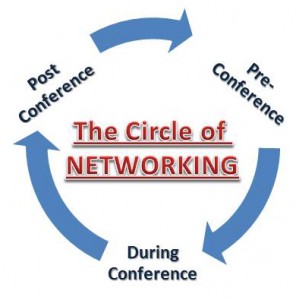
circle of networkingAs I make the rounds of speaking to my partners about their 2013 plans the topic of “What conferences and industry events are you looking at attending?” will definitely be a key point of conversation. Once I get their list, I’ll follow up with, “Have you attended this event in the past?” And then, “Can you talk to me about why this conference is on your radar? What makes it important for your networking and business development?” And the kicker: “Can you point to any new business opportunities or leads that have come out of your participation in this conference?” I want to know and understand why the attorney is taking time out of their week to attend the conference, losing all those billable hours. If the answer to the final question is no, I want to know why. I need to understand why the firm should continue to underwrite their attendance if nothing is coming of it. Sometimes a conference has lost it’s mojo. Perhaps it has become too vendor heavy? Perhaps the attendees have shifted and the decision makers are no longer there? If so, it’s time to let it go and move on. However, if it’s still a great event, we need to understand why they are not converting their attendance into new relationships, which can then be converting into new business. Thom Singer had a great post this week: Networking Mistakes Being Made At Almost Every Conference. His seven mistakes are:

  1. Spending too much time with coworkers and other friends.
  2. Seeking time with celebrity speakers, industry gurus and other VIPs.
  3. Talking too much.
  4. Paying attention to electronics.
  5. Skipping keynotes and other sessions.
  6. Expecting a short conversation to make someone part of a network.
  7. Arriving late, leaving early, or skipping the networking time altogether.

I’ll add a couple of my own:

  1. Avoiding the exhibitors in the exhibit hall. Sure, they are there to sell a product. But they can be great conduits to further introductions. Think “referral network.”
  2. Not participating in the social media surrounding a conference. Go to the conference website. How many have Twitter accounts? Follow. What’s the hashtag? Learn it. Use it. Tweet it.  Start communicating with and following others going to the conference. Same thing with Facebook and LinkedIn. You’ll be amazed at the conference within the conference. I wrote about my experience in this post, Me, Twitter, LMA and Laura Gutierrez.
  3. Identify connections to make before leaving your office. Who is going to the conference besides you? Many conferences will pre-publish an attendee list. If not, check last year’s conference. Who do you know who regularly attends? Call and make those lunch and dinner plans weeks in advance. If they’re too busy, plan to meet for coffee, or attend one of the sessions together.
  4. Not following up AFTER the conference. Collect every business card you can. Grab the conference attendee list (usually in one of the handouts). Start connecting with everyone who has a LinkedIn account, including the speakers and keynotes. I have yet to have someone NOT connect after an event. Just make sure to send a personalized message.
  5. Continuing to develop those new relationships. It’s just not enough to connect with someone on LinkedIn. Now you need to establish that relationship. You do so by keeping your LinkedIn account alive. Post your recent article and achievements to your profile (this blog post will automatically be added to my profile, with a customized message, when I hit publish). I just had a former colleague contact me to have lunch because she saw an update of mine on her LinkedIn updates.
  6. Is it time to upgrade your investment? Some conferences are fine to attend and network. But is this conference a great opportunity where the firm should be a sponsor? What about hosting a client/prospect dinner?
  7. Double down on your involvement. If the organization or conference is a great fit for you and your practice/business, volunteer to get involved. The 2014 conference committee will be hard at work immediately after the 2013 conference ends. See how you can get more involved. If a trade group, volunteer for a committee, and work your way up the leadership ladder. If a stand-alone conference, start to develop relationships with the conference organizers so you can get on next year’s dais, or 2015 if need be.

With any type of networking opportunity, you will never get anything out of it if you don’t invest your time and effort. I am fond of saying, “The answer is always no if you don’t ask.” When it comes to networking, the business opportunities are always nothing if you don’t make the investment. If you have great conference attendance tips, please feel free to add them to the comments section below.

Learning to chart her own course. (c) H. Morse 2012

Well, here we are. First day back in the office after a holiday break. We have 363 days of potential ahead of us.

What are we going to do with all that potential?

How about start by thinking a bit about 2012. How’d it go?? Here’s a post I wrote last year, So how was your year? to aid you in doing a quick reflection.

I’ll tell you one thing, for me and the Sport’s Dude, there were some bumps in the road and surprises we just never anticipated as I sat around and wrote my first post of 2012, Where’d ya go??

Some of those surprises were welcomed; and others sent us for a loop and really impacted our lives and careers.

While everyone knows I am not a huge fan of multi-paged marketing and business plans (A simple marketing plan for 2010 and A Daily Resolution), I do think you have to have a good idea of where you are headed so that when you are broad-sided by life, you can course correct as quickly as possible; or when the winds of change take you in a new direction, you can make an easy adjustment to your sails for smoother sailing.

There is no one right or wrong way. It’s what works for you that counts. You just need to figure out what works for you.

I wish every one of you a happy, healthy and prosperous New Year.

I also wish you the flexibility to traverse those bumps in the roads and detours, which you will surely face, with patience, humor and curiosity.

I don’t know where my life will be on December 31, 2013, but I know where it is today.

So, just for today I will:

  • clean out my in-box;
  • follow up with that partner on his conference;
  • finish that proposal;
  • draft that blog post;
  • hit the gym.

That seems like a good plan for today.


An idealized me on the run.
It happened again, yesterday, in an elevator. I’m tap, tap, tapping away on my iPhone and someone, feeling very sorry for me says, “Wow. Don’t you ever get a break from that thing?” To which I’ll either laugh and ignore, but if we have enough time I’ll tell them the truth:

I LOVE my technology. I love being attached to my iPhone. I love the freedom it gives me, and the opportunities it provides. I remember the days before those first Blackberrys were issued when I couldn’t go out to lunch or the bathroom without fear of missing an important call or e-mail. And what did we do before VMWare? Oh, yeah, we worked, in the office, until late at night and into the morning, rather than in our jammies on the couch.”

With all that technology, not only can I walk away from the office when “life” is kicked up and in session, but my “life” can track me down and keep me connected when I am off in some remote part of the world for the better part of a week, like Grapevine, TX. Today is a case in point. My iPhone, laptop, and iPad have allowed me to be 100% plugged into work while sitting at my mother-in-law’s dining room table. You see, she’s in the other room preparing to make her final journey home. My husband is at her side. I’ve rushed off to Trader Joe’s for some food; provided emotional support to the Sports Dude; baked bread; and sat by Suzanne’s side while he took a break. In between all of that, I sit here, tap, tap, tapping away. I have webexed two conference calls with my partners in three different offices, sharing my office desktop as we conducted business. I chatted with a firm client as we plan a value-added benefit to our relationship for next year. And I spoke with our PR consultant and am trying to wrestle up support for a project for Q1 2013. TJ Salted Caramel Cookies The only thing I am missing by not being in the office are the treats from all the vendors that are piling up in our kitchen. Trader Joe’s did come through with these bad boys >>>>> So, for me, all this technology is a 2-way street. Yeah,  my “office” is on the 47th floor of a high rise in downtown LA., but my technology suite also means it can be in an elevator, or at 40,000 feet, or at a school program, or by the bedside of a sick family member. This oh, so bad technology that keeps me attached to the office 24/7 allows me to leave my physical office and do the things that are necessary for me as a mom, wife, Girl Scout leader, and daughter-in-law, without compromising my firm, my job, or my role as a legal marketer extraordinaire. All this technology also allows me to stay connected to my family and loved ones, especially my kids, when I have to travel, or cannot leave the office. I love opening up my photo files on my phone or iPad to find my daughter’s latest collection of self-portraits, or getting to watch the school program that I missed. I LOVE this commercial for Verizon’s Share Everything plan, because I get it. Never being able to stray too far from my technology, interestingly enough, turns out to be the exact thing I need to stay 100% plugged into my life. And, on a day like today, that is a very good thing.

trouble-with-tribblesNot sure if you’ve checked your in-box yet, but there’s another opportunity for you to purchase an ad based on your latest ranking. Oh, I know you are a preeminently, super, best lawyer, but please, stop buying these ads. The opportunities appear to be multiplying like tribbles, or ads for male enhancement paraphernalia in my junk mail folder. Yes, this one looks cool, and that magazine is great, but no one, no one, no one, especially a general counsel, will base their purchasing decisions on these ads and rankings. I have seen a few RFPs asking to know how many lawyers are Chambers or Martindale AV ® ranked, but I am very skeptical of how and why that question got in there in the first place. These “opportunities” are all about playing on the lawyer’s vanity, and some company making money off the plaque, video, or ad. Not sure if you realize this, but they never contact the marketing department on these opportunities, because they know what we know:

  • They mean nothing.
  • They are all for show.
  • They are all about selling advertising.

Don’t get me wrong. I am not against advertising when it is part of a branding campaign and done well. However, the purchasing of a vanity ads does not fall into this category. I do believe that you can strategically use the information to your advantage, but it needs to be strategic, which does not include purchasing an ad. General counsel do not hire you because of a ranking. They hire you because they have a business problem, and you have the skills and knowledge to solve that problem. You do not need one of these countless directories to tell that story for you. With all that said, if you’re cool with knowing that we will not be able to measure new business back to the vanity ad, that it is all for show, and it does not influence the purchasing decisions of general counsel, I’ll go ahead and spend your money for you. I’d rather get a new pair of shoes. But what the hell. At the end of the day, it’s not my money.

06.10.11 christmas stockWell, tis the season and all.

I’m checking out BTI Consulting‘s latest survey where GCs name the most arrogant law firms, and there are no real surprises.

According to Law360’s article, GCs Name Most Arrogant Law Firms:

As the legal industry rebounds from the recession, cockiness is also on the rise, as the number of firms deemed arrogant in a new survey of corporate counsel has ticked upward since last year and doubled from what it was two years ago.

The 2013 BTI Client Services A-Team report, published by The BTI Consulting Group (Wellesley, Mass.), suggests that many of the nation’s legal powerhouses have returned to their smug old ways, no longer desperate for business and no longer willing to budge on fees or otherwise give ground to clients.

So who made the list??

This year’s naughty list includes: Skadden, Kirkland & EllisCravath, Hogan Lovells, Jones Day, King & Spalding, Latham, Quinn Emanuel, Sullivan & Cromwell, Wachtell and Weil Gotshal.

Lest one equates arrogance with service, only four of these firms made BTI’s Top 30 in client service.

As for the Nice List? Here’s the 2013 Client Service 30. The top 10 are:

  1. Jones Day
  2. Mayer Brown
  3. Skadden, Arps, Slate, Meagher & Flom
  4. McGuireWoods
  5. Seyfarth Shaw
  6. Thompson Hine
  7. Kirkland & Ellis
  8. Faegre Baker Daniels
  9. Baker & McKenzie
  10. Sullivan & Cromwell

And, yes, Virginia, it is possible to make the Client Service 30, while avoiding the Arrogance list entirely. Just ask nice guys Seyfarth Shaw, Thompson Hine, and Littler Mendelson.

So, what does this mean? Not too much, obviously. When it comes to “bet the farm” litigation, the “like” in “know, like and trust” can often times be thrown out the window. You need your team to win at any cost, and you’ll put up with that “arrogance,” along with the hourly rates of over $1000.

However, are you going to put up with that type of arrogance or behavior when the stakes are not as high? Or will you take your business elsewhere? Seeing the profits and revenues of the AmLaw 100 and 200, I’d say a lot of that work is being spread about the country. And, according to the Go-To Law Firms ® list, not one firm holds a lock on any one company.

As the recession did show us, corporate counsel are willing to take their business elsewhere, and that is not about to change any time soon.

So while making the arrogance list might lend a smile to the smuggest of the smug, it should also raise eyebrows of caution.

Number one on the client service list, Jones Day, is quite capable of handling any work that the other firms might have. Sure, they are on the arrogance list as well, but not so high as to make the news stories.

—-

If you don’t know BTI, they slice and dice all the fun information on how general counsel see, view, and hire outside counsel; how and if they will spend money; what drives the purchasing decisions. Great pie charts. You can download (for a price) the full BTI survey here.

Thank God the elections are over.

I survived my first camping (IN A TENT) trip with the Girl Scouts at Camporee!

Nuts & Magazine sales are on for Girl Scouts.

Not to mention the Mixed Bag Design fundraiser at our school, which ended on Monday; and the See’s Candy sale, which started on Tuesday.

Fall volleyball season is over for the girls; already signing them up for the Spring.

The Sports Dude is scheduled for his big surgery Thanksgiving week (no cooking for me this year).

Sadly, we are also dealing with a parent with terminal cancer.

Good new is, I can’t complain about having too much time on my hands.

But it is time to turn my focus back to legal marketing and The Legal Watercooler, and what better way than with Emily Post’s new rules of tech etiquette for the office.

For those of you who thought etiquette ended in the days of Downton Abbey, you are wrong.

Social norms, while in flux, still exist and we need to find our way through the haze (which is now legal in several states, I hear).

From the above linked article:

These days, employees seem to care more about connecting with their devices than with their fellow colleagues.

In fact, 4 in 10 HR managers have received a complaint about an employee’s improper use of mobile technology in the work force, according to a recent study by Intel. The most common complaints? A phone ringing during a meeting (60 percent) and using a laptop to check email or surf the Internet during a meeting (44 percent).

Does that mean you shouldn’t ever take helpful gadgets with you to meetings? No. But how we deal with these modern-day peccadilloes is constantly evolving.

Technology is here to stay, so deal with it.

I bring my iPad to meeting to take notes, read documents (have you seen what the LMA Board Book looks like??? Puts the Vogue September issue to SHAME), and, yes, keep tabs on the office. Discreetly.

I have to use my common sense, however, at all times.

When I attend a conference where I intend to live-Tweet or blog, I introduce myself to the speaker, letting him or her know that I am not tapping away to be rude, but am communicating their message to my followers.

When I am at a business event, or social functions, the iPhone is put away, unless there is an emergency that I am following (personal or professional).

To completely plagiarize from Miss Post, our smart phones are not additional utensils meant for the dinner table, and really should be kept out of sight.

Don’t get me wrong. Technology is a beautiful, beautiful thing. But it can also be more than a distraction.

At home, we are having to institute some rather strange rules, such as “no technology in bed after 10:00 p.m.”

Our punishments for the kids seem to revolve around technology: “If you hit your sister, you lose your iPod for the weekend,” and, “If you annoy your sister to the point that she hits you, no YouTube for the weekend.”

I don’t think that the final book has been written about technology and etiquette, but as we all make our way through the maze of (tech) life, I have found a few articles that might be of help:

Or, when in doubt, follow my simple rule: “Don’t be an a**hole.”

 Illustration by Ross MacDonald/Photograph by Kang Kim via RealSimple.com